About this Site
(A Letter from founder, Gayle Bluebird)
(About co-founder, Deb Trueheart)
This site was originally called Altered States of the Arts, named for a popular initiative that was started by artists (and art enthusiasts) in the Consumer/Survivor Movement at the Alternatives Conference in the 1990’s. With a new focus on inclusiveness, Artists for Change, is a call to action for persons who have lived (living) experience with mental health, trauma, or emotional challenges. It serves as a clearinghouse or “home” for historical works of artists who participated in the Consumer/Survivor Movement.
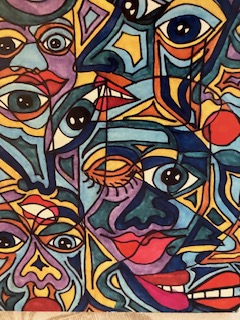
Exhibit
The site includes a curated Exhibit by artists in the Consumer/Survivor Movement. The Exhibit will change periodically, as more artists participate with Artists for Change. You will be able to locate the latest one in the menu at the top of the page or click Exhibit below.
Site Resources
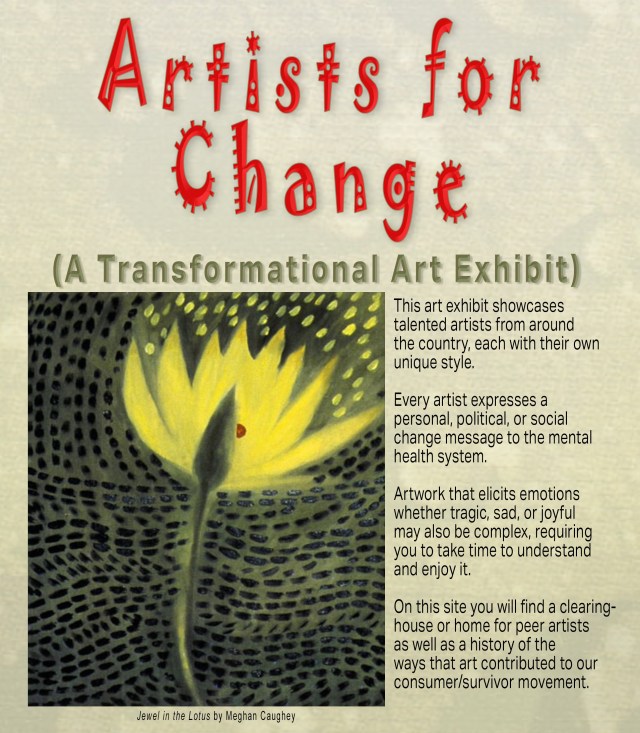
The site is chock full of different types of resources including links to articles, books, memoirs, presentation slides, and research by artists with psychiatric histories.
Historical Resources
Of particular interest is the historical archive, Altered States of the Arts, with anecdotal stories from early pioneers who performed at early Alternatives Conferences. Anyone can access the site and we hope it will be of interest to a wide variety of viewers.
Art You Can Relate to
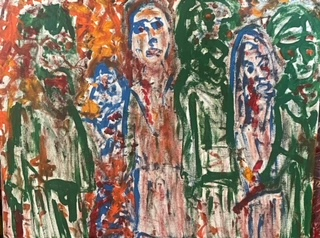
This website includes many examples of visual art, music, performance and written word, dance, and other forms of creative expression that “tell a story” that is in some way helpful for the reader to understand a person’s experiences or some aspect of living with psychiatric or mental health challenges. The content of the art may be personal, political or social in nature.
Creative Expression as a New Role for Peer Specialists
This site also provides many easy ways in which people can engage with the arts and encourage others (perhaps people who are being supported in a peer support relationship) to use the arts for creative expression. To be clear, this site does not offer “art therapy” as practiced by licensed art therapists, though we recognize art as therapeutic with a major role to play in a person’s recovery.
Why Now?
The need for Artists for Change has reached a point of urgency as many of our historical leaders pass on and greater momentum as many of the artists from the psychiatric Consumer/Survivor Movement still await being discovered.
The internet has allowed us to search for survivor art and more survivors have written memoirs and autobiographies that can now come to our attention more easily, but they are not found in one place that is easy to access. The public reads articles in mainstream magazines about mental illness and may now be more apt to question things, like the value of psychiatric medication with the potential for overmedication but not realize that there is a whole community that has lived (and living) experience with these issues. Recovery is a word the psychiatric survivors originally rejected but eventually espoused. Recovery has demonstrated that it is not only possible for the few but probable for the most and it is now a word that even psychiatrists must finally reconcile.
While there is so much to celebrate in the accomplishments of the artists who made these advancements in raising awareness and calling for reform, they too often have done so alone; left to do their own advertising to make a living from their art and their publicity may not go far enough.
At this time, there is no central place for artists to find each other to support each other. Though Facebook has been helpful for some, many of the artists don’t use social media and miss the rich content that is available there.
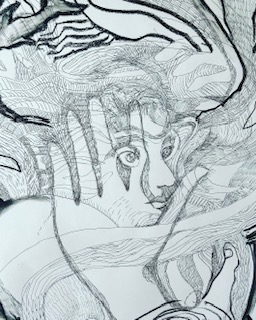
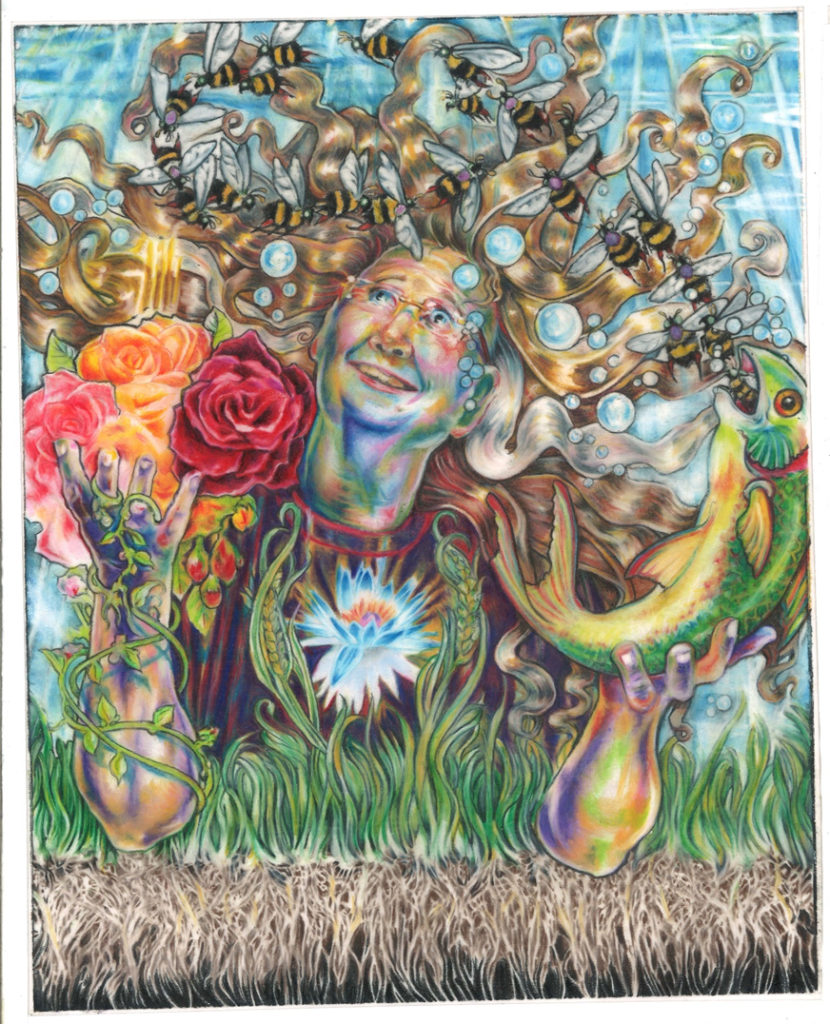
Artist: Meghan Caughey
What Helps – Art Appreciation
Another barrier for some consumer/survivor artists’ work has been content that may be controversial or not understood. Art that is considered “dark” may not get more than a glance. Art seen purely as entertainment find deeper meanings may not be understood. Having the range of psychiatric survivor art on this site, there may now be an appreciation of this art that was not there before. Now people may take a second look. People might now wonder what the artist is saying?
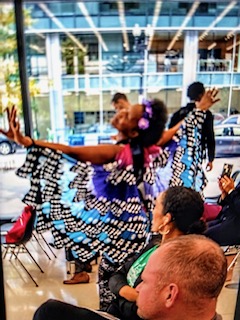
To honor those who came before, this site includes a short history of Altered States of the Arts, and how the arts were used as early as the seventies when the psychiatric survivor movement began. Ex-patients or ex-inmates, as they preferred to be called, were illustrators, writers, and poets during the movement years, but the images were stark. Slogans were used in marches, unique statements on posters, and accomplishments of the movement in the 70s pushed the arts forward. This site helps us to remember our roots, where we came from, and to visualize how the past can inform our future.
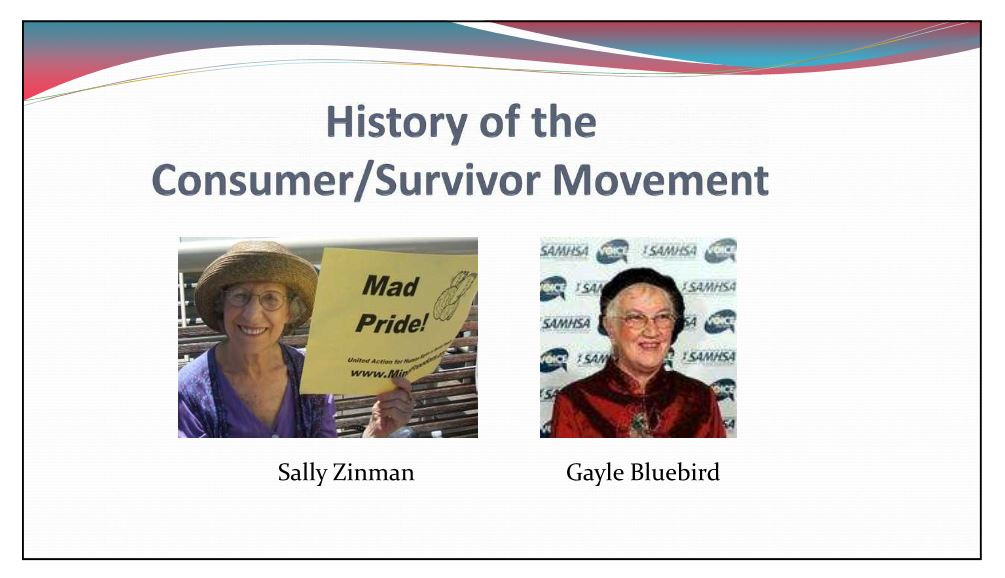
View a Gallery of Photos of Movement Leaders
Getting Started with this Site
If you haven’t already done so, take a moment to read the introductory letter from Bluebird, visit the Exhibit and look through the other links on the site to learn more about the arts and artists that were involved in the original Altered States of the Arts, how you can learn from them, and consider ways to connect what you’ve learned to participate in this new call to action: Artists for Change!
 Altered States of the Arts (Psychiatric Survivors)