Encouraging Creative Expression: A Role for Peer Specialists
For an article by Gayle Bluebird on How Peers Can be Creative, click here.
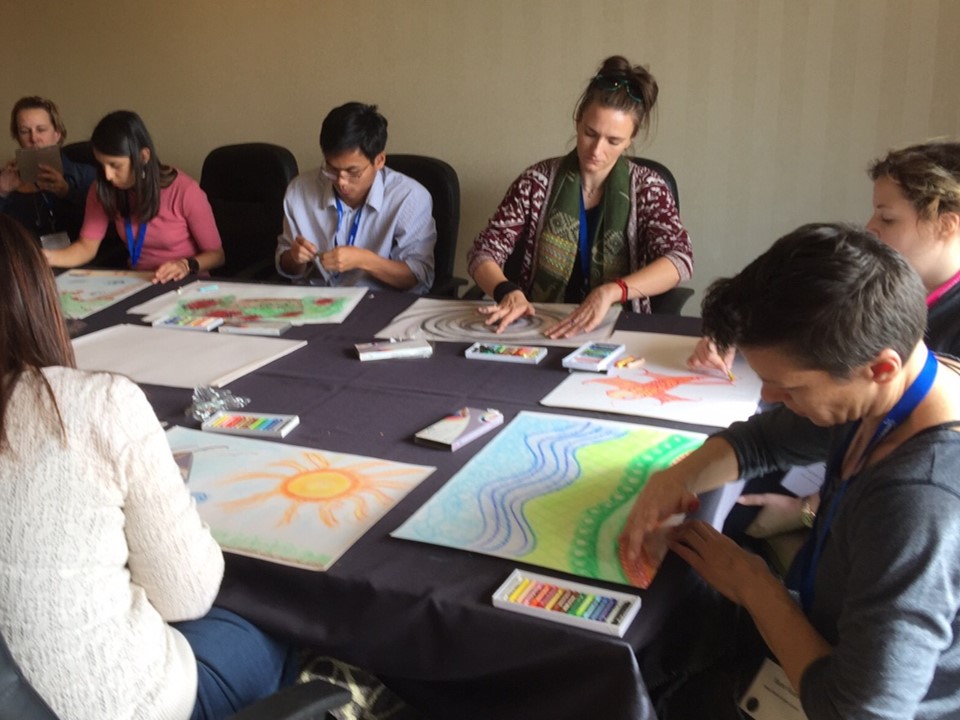
While art therapy and arts expression therapy has come a long way changing their role as interpreters and being more person-centered, it is still a part of a professional clinical team. A major difference from a peer role to art therapist role is that Therapists are discouraged from self-dis-closing. There is a power differential which is not present in peer support.
Another difference might be that as peer arts networkers we might be using art for self-discovery as a tool to express traumas as well as a tool just to have fun. The process being rewarded with an end project that is simple to do.
All peers should get some training on how to use the arts while some peers may want to increase their skills on how to work with creativity.
- Peer Arts Mentors different from art therapists
- Art as a means to “tell your story”
- Relationships are mutual
- Art never exhibited anonymously!
- Trauma issues often discovered safely
- In workshops ALWAYS have time for show and tell
- You may be helping someone to discover their true passion is art!
Reaching Across with the Arts
Reaching Across with the Arts is a resource guide to be used by mental health consumers
to explain how to create self-help arts programs and activities as well as how to use creativity in their everyday lives.
If you’re just getting started in working with people on arts projects or ways of expressing themselves creatively, this guide is a great place to start!
Hope Tote
In the article referenced above,
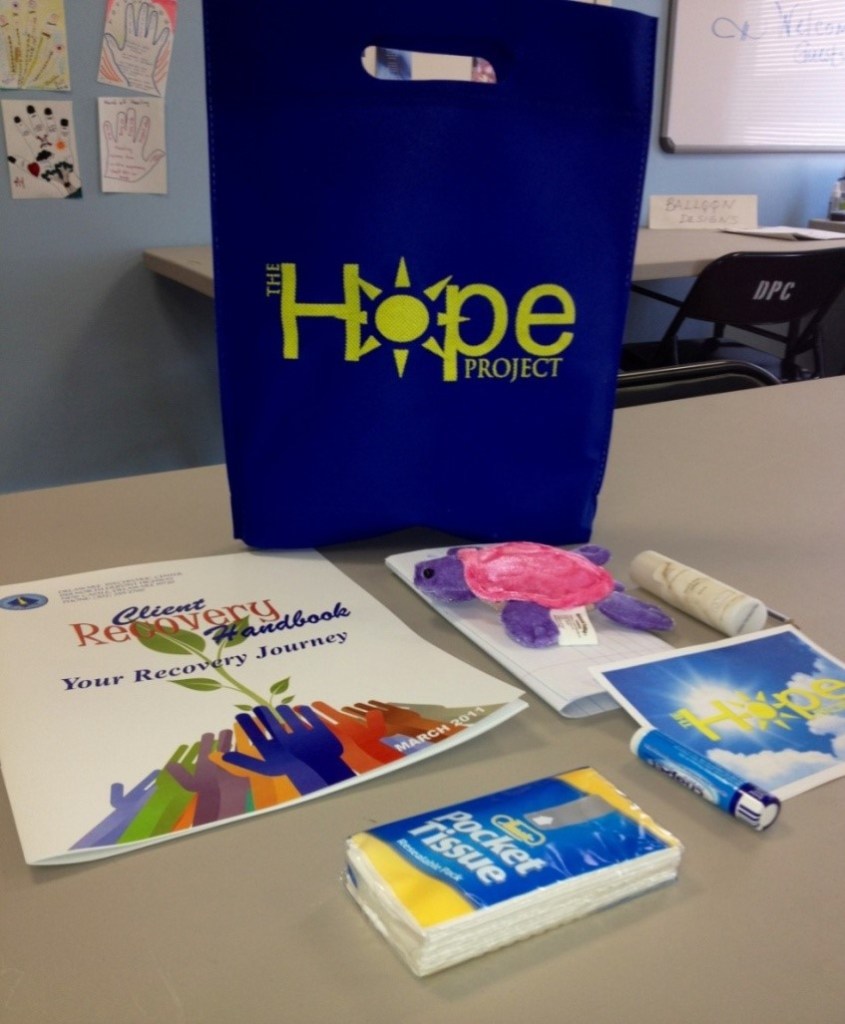
A hope tote in this example was for persons in inpatient units who were given this bag on admission to the state hospital in Delaware. We had to scrutinize very carefully what went into the bag for safety, but you can see some of the above that we included.
A Hope tote can also be an arts tote, or arts box, some of us will remember pencil boxes that we all got as children when we started school that contained a pencil, eraser, note and crayons. We all got one. Later school bags, now back packs. Use the concept to create an arts bag, which by the way you can make from a decorated pillowcase with a draw string placed in a hem at the top. An arts bag would have in it markers, crayons, pastels, paint brush, glue stick, and other things as desired depending on the interest of the person you are serving. Some of you already have a WRAP toolbox that may have some of these items, but I think an arts bag or tricky arts bag, etc. Come up with your own name is different.
Hope Tote or a Creativity Bag of Tricks
- Word Search/Crossword puzzles
- Joke of the Day
- Small Journal
- Stuffed Animal
- Package of Tissues
- Small Notebook
- Stress Ball
- Affirmation/Fortune
(Arts Materials depending on the audience and what is allowable at a given site.)
Pillowcases of Recovery
The original title was, “Pillowcases of Unrest,” of this signature project first done in Catskills of NY with one of the first peer run art centers under Frank Marquit.
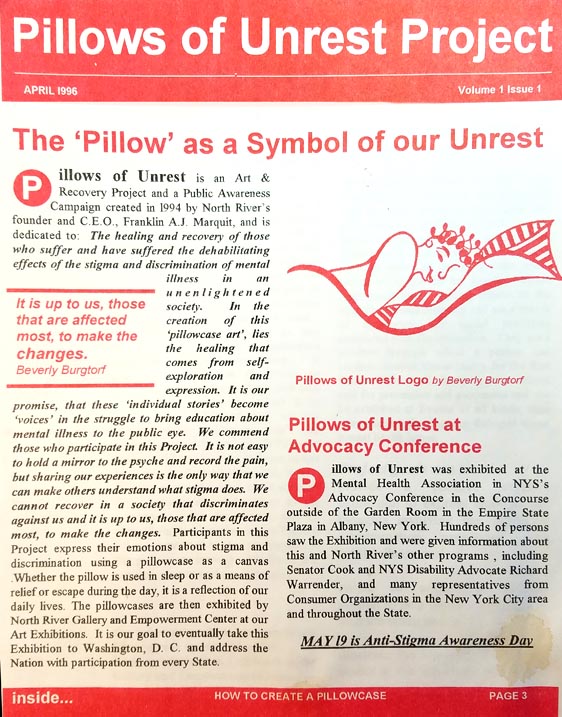
Ed Pazicky also contributed to this project and called it Pillowcases of Recovery. It has been included at many conferences, done at state hospitals as special projects and exhibits, enhanced with different names, different themes, different sizes of pillowcases. You just need a pillowcase and whatever supplies you have on hand.
See more examples…
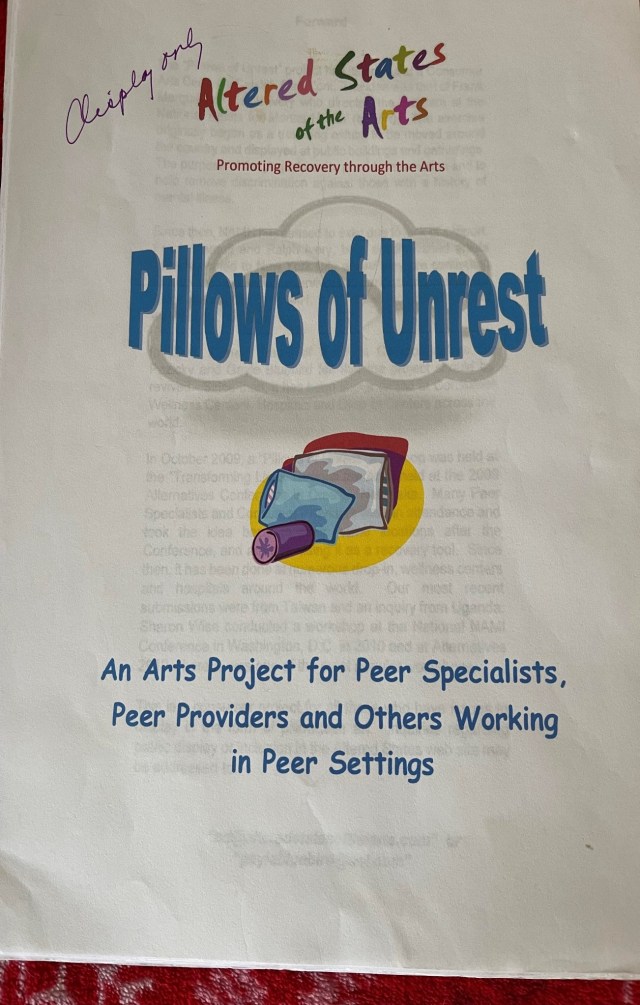
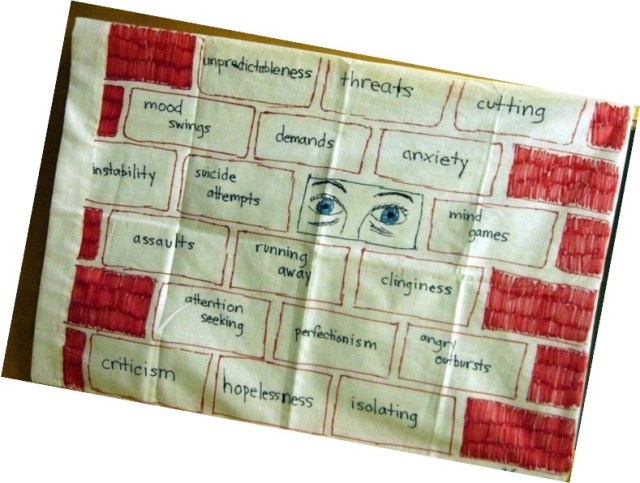
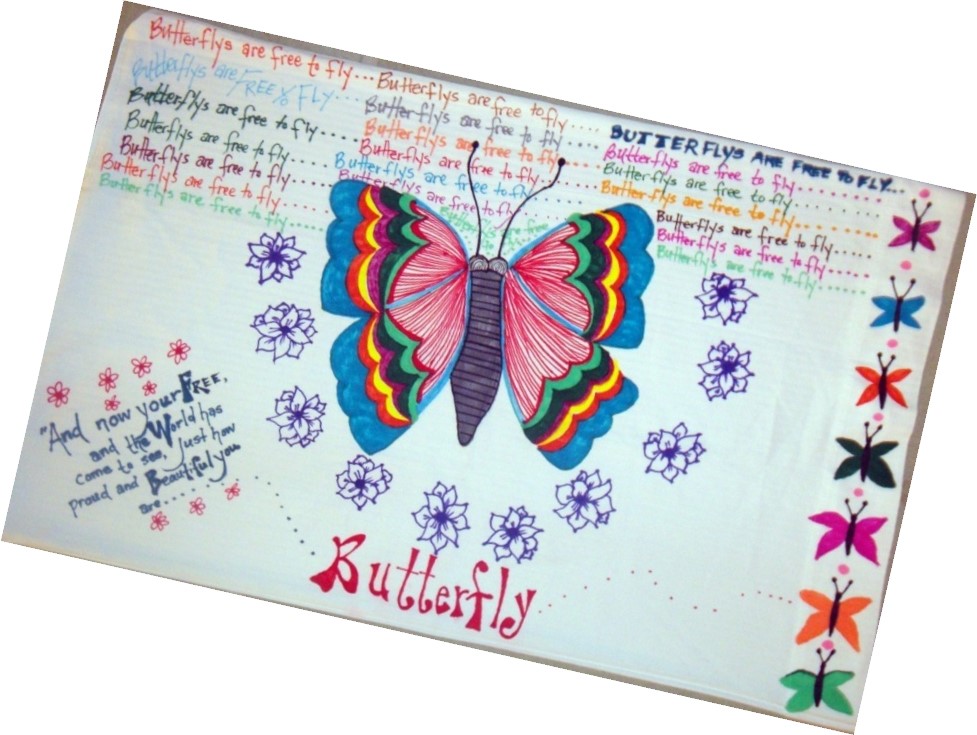
You can incorporate whatever different types of materials you have available. Buttons, feathers, lace, etc. Create a box for this art project. Whether you do it with markers only or using various materials it is always a positive experience.
The project has evolved to Pillows of Hope, which Sharon Wise is now using as one of her many signature projects and she has created some of the most fabulous display pillowcases of her own.
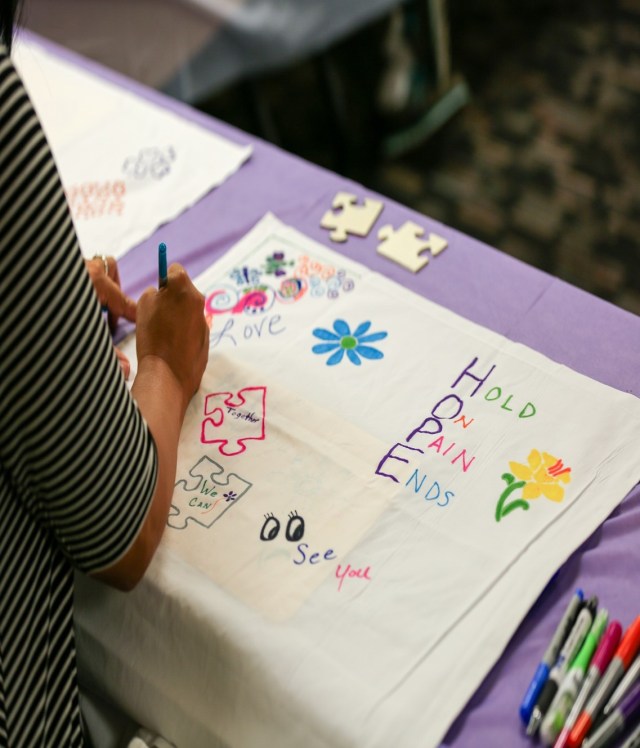
Click here to view more about the Pillowcases of Hope Project
Click here for a list of Arts Programs
“Once Upon an Apron”
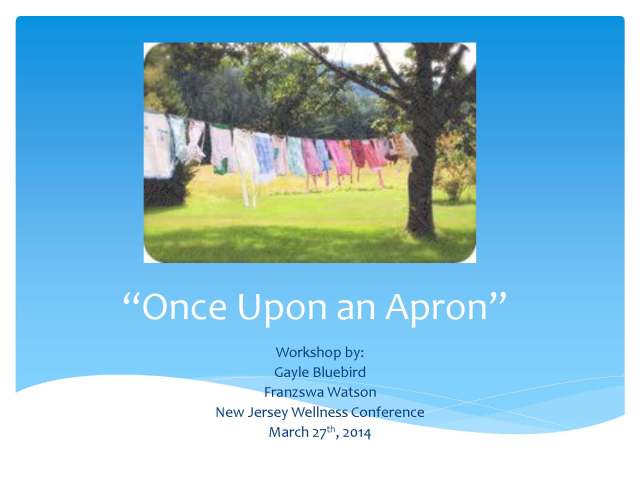
This presentation on the history, definition, and purpose of the apron was a workshop on creativity by: Gayle Bluebird and Franzswa Watson for the 2014 New Jersey Wellness Conference.
Scribble Art
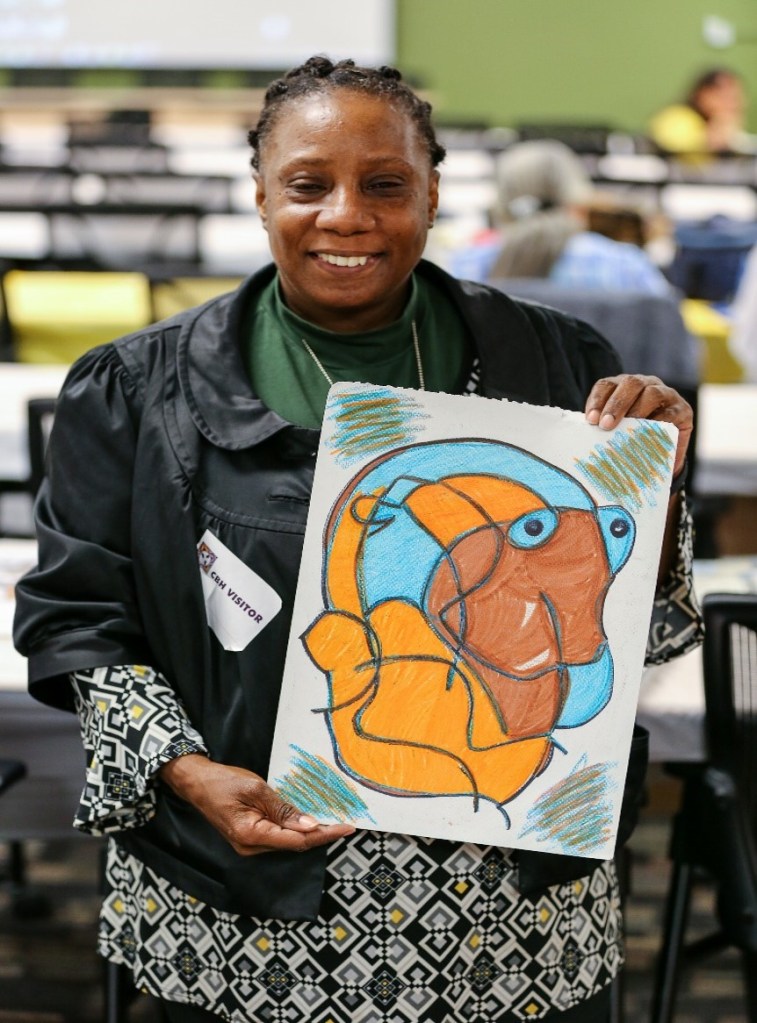
Brenda Lewis is from Philadelphia and participated in the Bluebirds Arts Fest in August, 2016. She says, “Hello Gayle, l am a self-made artist since 2009 while suffering from PTSD my therapist introduced me to the scribble method to help me with my healing process
Since then, l have been sharing my art with different programs though the community Recently the department of behavior health gave me an award for art and mental health. l am a CPS, WRAP Facilitator and Storyteller and work for Resources for Development as group leader for WRAP where l introduce writing and drawing with WRAP.
Playful Drawing
Take a large sheet of paper and a soft graphite stickor marker and cover the paper with scribbling. Make big swirls, tight curls, loops and zigzags until the paper is covered.
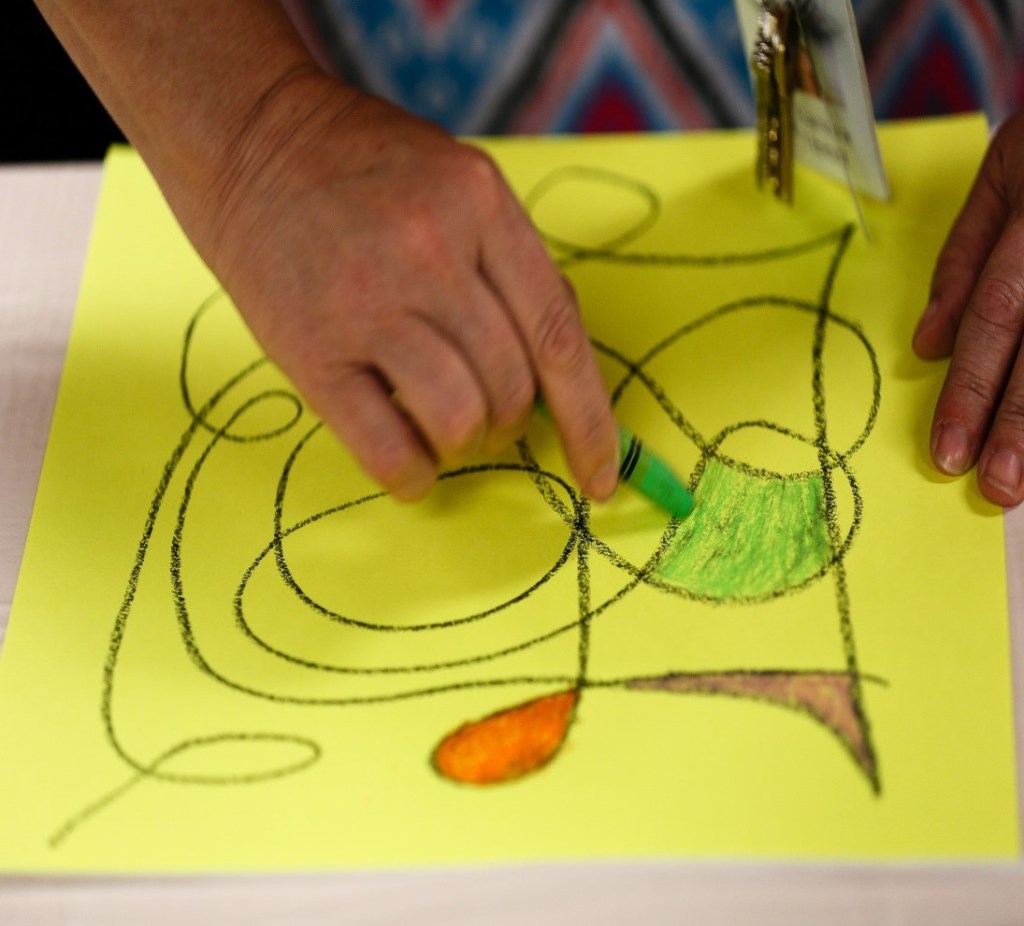
Ready, Set, Scribble!
Before we get into the nuances of gesture drawing, let’s have some fun. Place a large sheet of paper on an easel or table and grab your soft graphite stick. Now cover the paper with scribbling as in the example above, right. Make big swirls all over the paper. Draw from your shoulder, not from your wrist. Don’t stop your hand and don’t lift the graphite from the paper. Make some tight curls; then make some jagged zigzags, loops, coils and points. Notice how this process feels and get in touch with whatever comes.
What Do Your Hands Say?
For a presentation, Our Future is in Our Hands, about the importance of our hands in touch, communication, and using our hands in the arts by Gayle Bluebird, click here.

What do YOUR Hands Say?
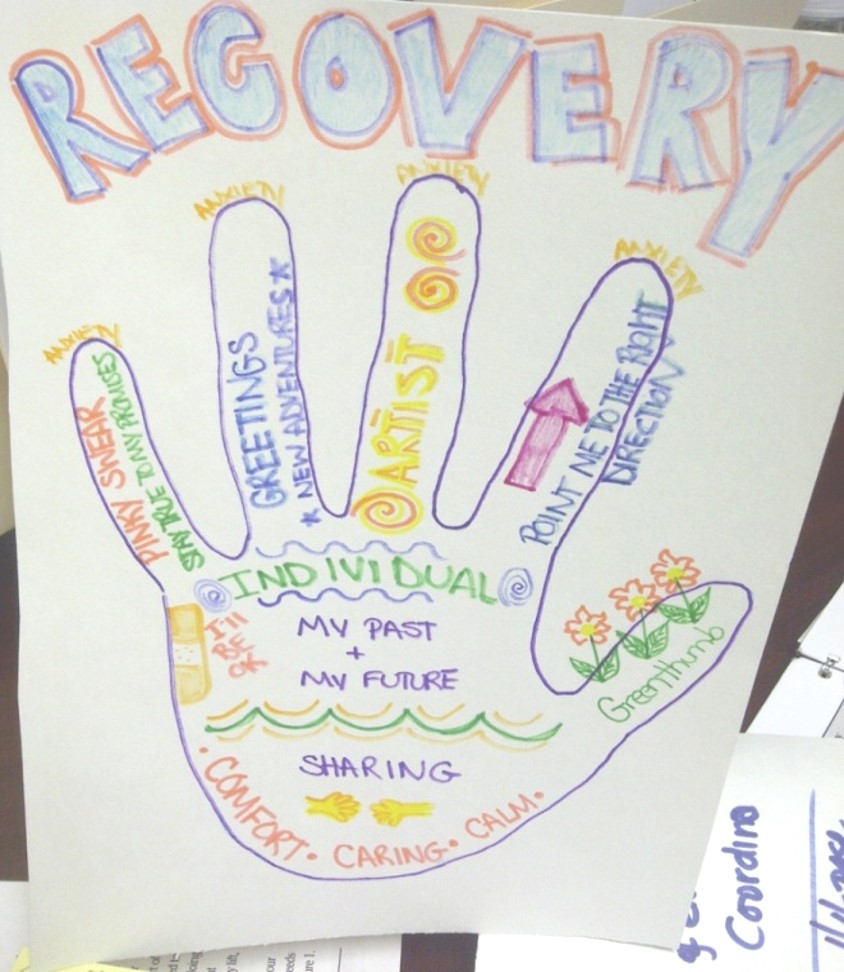
As a Peer Specialist, you can guide many creative activities and bring about new awareness. In this activity, people are first instructed to look at their hands. This creative project encourages participants to actively and creatively explore and express how their “hands” have contributed in their individual recovery journey. Oftentimes, we are not aware of how these two significant extensions of our bodies, have played such a vital role on our recovery journey. Whether to embrace ourselves and others, caress, console, give a “high five” for life, or push away things that are not good for our healing process. Are there rings on their fingers? Might help to talk about your own hands or samples of other peoples artistry of their hands.
Creative colorful hand expressions may include; poetry, pictures, values, journeys, etc. Reflect as a reminder of where you were, where you are going, and turn any sadness into happiness
Don’t forget to have people share their hands and talk about them. This is equally the most important part of the exercise.
Mandalas
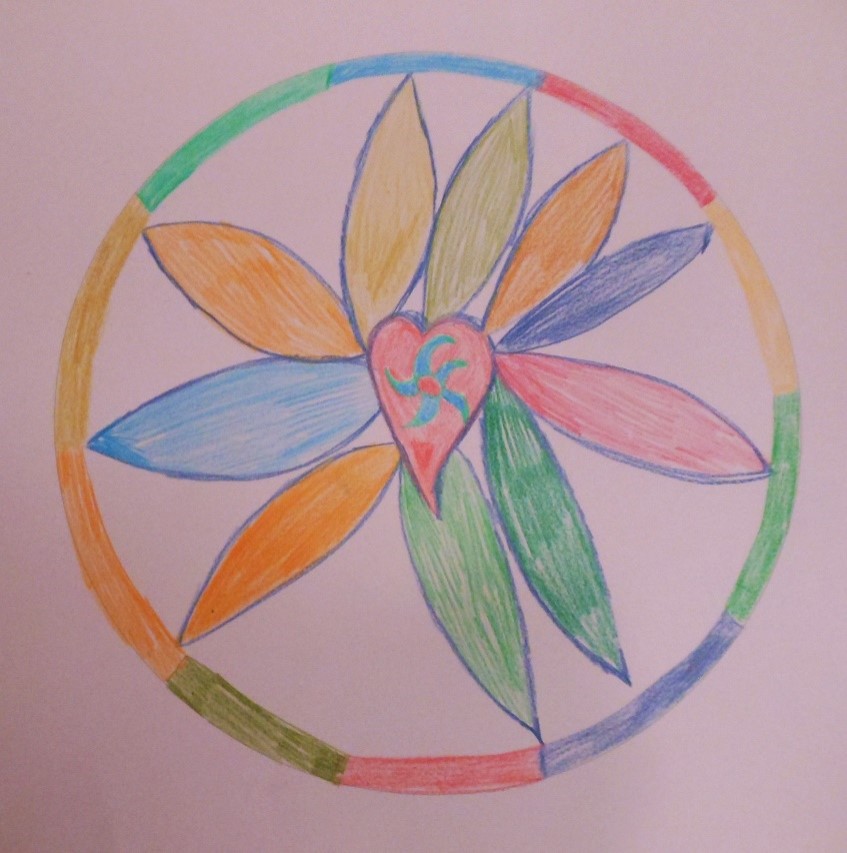
Theresa Foster is a writer, peer and artist who trained to become an Expressive Arts Educator. I attended a workshop she did on making mandalas at a workshop here in Gainesville, Florida. It was excellent.
Creating an Arts Festival
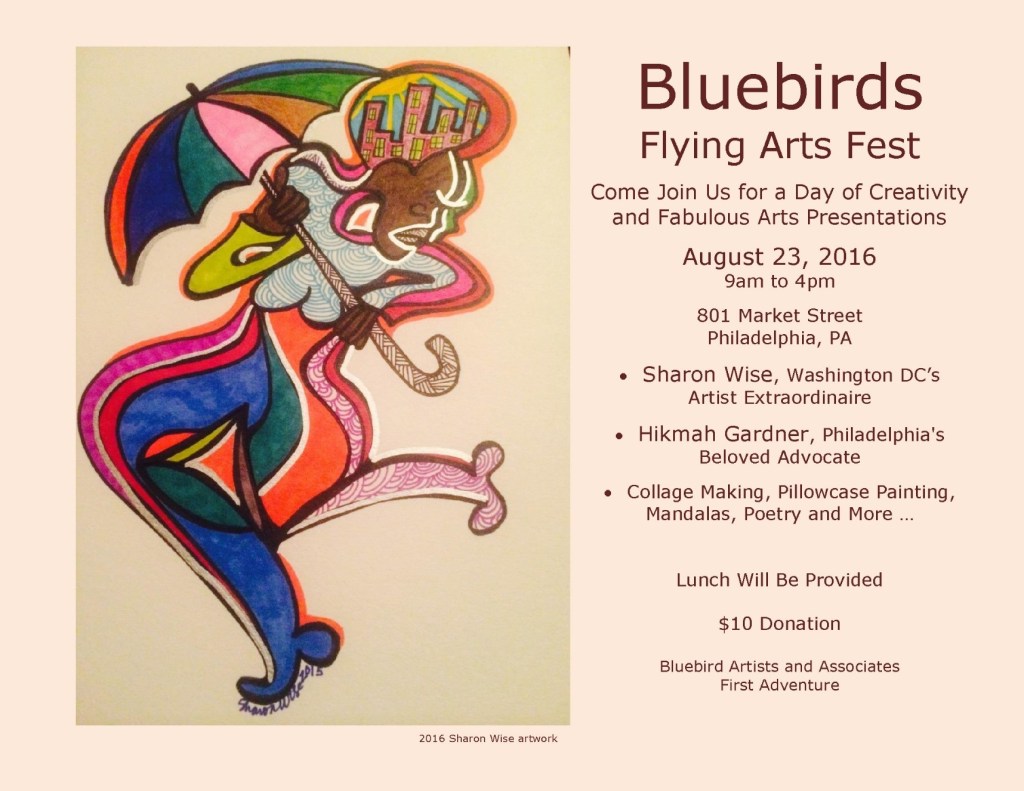
This is one example of an Arts Festival that was held in Philadelphia in 2016 as an adjunct to the N.A.P.S. conference. Working in collaboration with the Office of Behavioral Health in Philadelphia, the art festival was held in the office and accomplished with donations. Tables were set up for different types of activities, such as collage, pillowcase painting, mandalas, painting, ceramic murals, and poetry. Approx 80 people showed up at different times of the day. With a little organization and collaboration, it is possible to set up an arts festival or arts workshop for your local community.
Collage at the Arts Festival
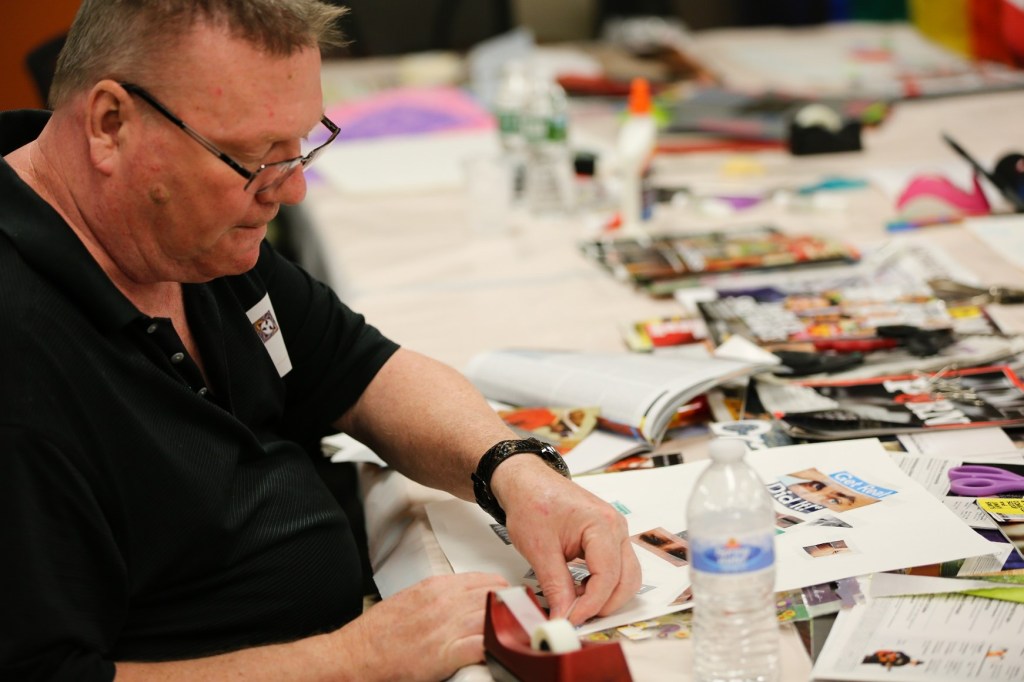
I believe an arts presentation should include the artists, the process and the ideas. I hope you will get some ideas from these slides and try them. You will also gain an appreciation of some of the artist creators, some whom you may know if you have attended Alternatives or N.A.P.S. Conferences. I have included activities that are easy to replicate and that have been used successfully in a variety of mental health locations.
- Collage
- Scribble Art
- Pillowcase Art
- Hands Project
- Self Portraits
- Dance-Movement
- Jig Saw Puzzles
- Adult Coloring Books
(This is just a sampling—there are endless possibilities)
Transforming Lives with the Arts (online course)
If you are looking for more training or awareness of what is available for peer specialists on creativity and the arts, the Academy of Peer Services is an online training program for the certification of peer specialists in New York State. The training is free of change, available to anyone with an internet connection, and includes Transforming Lives with the Arts, an elective course that speaks to how the arts can be integrated into almost any venue in which peer specialists are working. To take the course, you can enroll (free of charge) with the Academy of Peer Services and register for the Elective course, Transforming Lives with the Arts. https://www.academyofpeerservices.org/
Workshops by Art Leaders
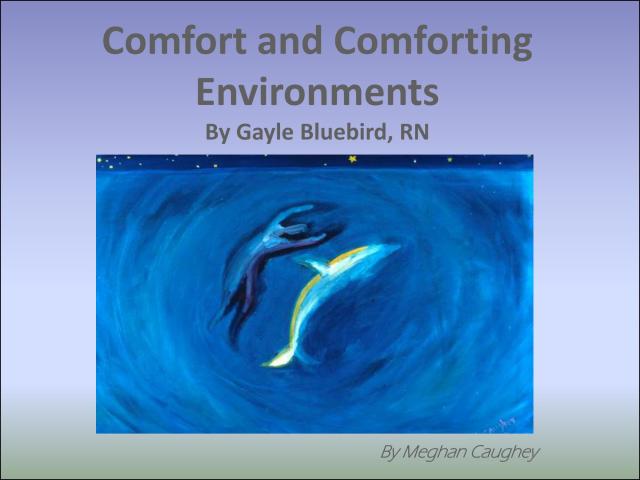
For the section on creating or leading art projects, see the section on Presentations by Art Leaders.
Starting your own Arts Center
For an article about setting up your own Arts Program for Project, click here.
 Altered States of the Arts (Psychiatric Survivors)